Pay in installments of $5.99 with
 ,
,
 and
and

Shipping Estimate
USA
- USA
- CAN
- USA
- CAN
Ships within 48 hours · Estimated delivery Jun 28 - Jul 3
 Promo Codes Available:
For Your Every Summer RSVP, with Code: SUMMER15
Description
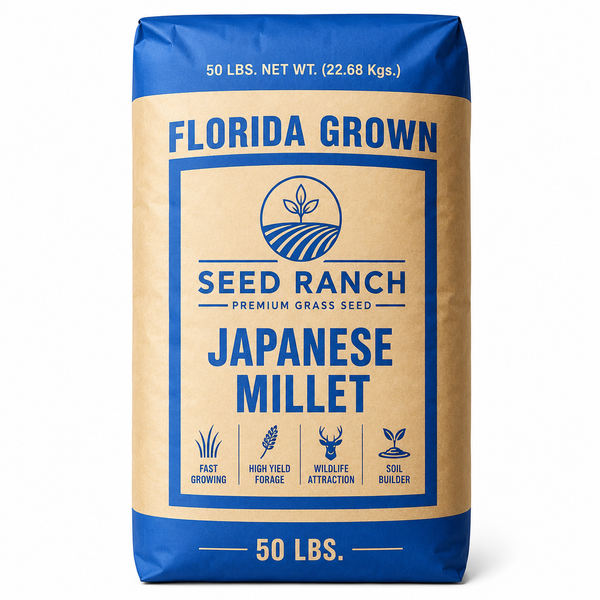
millet seeds for planting Seedranch Japanese Millet SeedJapanese Millet Seed Florida Grown Scientific Name: Echinochloa esculenta Fast Growing Wildlife Food Plot & Erosion Control Grass Seed Florida grown Japanese Millet Seed is a warm season annual grass widely used for wildlife food plots, waterfowl management, pasture enhancement, erosion control, and soil stabilization. Known for its exceptionally rapid growth rate, Japanese millet is one of the quickest maturing millet varieties available, often
Japanese Millet Seed | Florida Grown
Scientific Name: Echinochloa esculenta
Fast-Growing Wildlife Food Plot & Erosion Control Grass Seed
Florida-grown Japanese Millet Seed is a warm-season annual grass widely used for wildlife food plots, waterfowl management, pasture enhancement, erosion control, and soil stabilization. Known for its exceptionally rapid growth rate, Japanese millet is one of the quickest maturing millet varieties available, often producing seed heads within 45 days after germination under favorable growing conditions.
This highly adaptable forage and grain-producing grass performs exceptionally well in moist soils, lowland areas, and seasonal wetland environments where many traditional forage crops struggle. Japanese millet develops abundant leafy forage and nutrient-rich seed heads that attract wild turkeys, ducks, doves, quail, and other game birds throughout the growing season.
Because of its aggressive establishment and quick canopy formation, Japanese millet is also frequently planted for erosion control, soil improvement, and temporary summer cover cropping. The crop can tolerate short-term flooding better than many annual grasses, making it a preferred option for wildlife managers and hunters developing waterfowl feeding areas.
Key Benefits of Japanese Millet Seed
| Feature | Benefit |
|---|---|
| Extremely Fast Germination | Establishes rapidly in warm soil conditions |
| Quick Seed Production | Produces mature seed heads in approximately 45–60 days |
| Wildlife Attraction | Excellent forage and seed source for turkeys, ducks, doves, and upland birds |
| Water Tolerant | Performs well in moist soils and low-lying areas |
| Erosion Control | Helps stabilize exposed soil and reduce erosion |
| Dense Seasonal Cover | Creates thick cover for wildlife habitat and nesting |
| Warm-Season Annual | Ideal for spring and summer planting |
| Adaptable Use | Suitable for food plots, cover cropping, pasture mixes, and conservation planting |
Plant Characteristics
| Characteristic | Details |
|---|---|
| Botanical Name | Echinochloa esculenta |
| Common Name | Japanese Millet |
| Plant Type | Warm-Season Annual Grass |
| Growth Habit | Upright, Dense Tillering Grass |
| Germination Time | Typically 5–10 Days |
| Maturity | Approximately 45–60 Days |
| Planting Season | April – July (food plots and forage) |
| Late Season Use | Erosion control and soil stabilization through October |
| Soil Preference | Moist, fertile, well-drained to moderately wet soils |
| Sunlight Requirements | Full Sun |
Recommended Seeding Rates
| Application | Recommended Rate |
|---|---|
| Mixed with Bahia Grass | 10 lbs. per acre |
| Wildlife Food Plot | 20 lbs. per acre |
| Erosion Control | 15–25 lbs. per acre, depending on coverage goals |
Wildlife Food Plot Performance
Japanese millet is highly regarded by hunters, land managers, and conservation programs because of its ability to quickly produce both forage and grain. The mature seed heads are heavily utilized by:
-
Wild Turkeys
-
Ducks and Waterfowl
-
Mourning Doves
-
Quail
-
Pheasants
-
Other Native Game Birds
The dense vegetation also provides seasonal bedding, nesting cover, and insect habitat beneficial to wildlife populations.
Soil & Moisture Adaptability
Japanese millet performs especially well in areas with periodic moisture or temporary flooding. Unlike many upland forage grasses, it tolerates wetter environments and is commonly used in managed duck impoundments and moist-soil habitat systems.
Its rapid establishment also makes it useful for:
-
Stabilizing bare soil
-
Reducing runoff
-
Improving soil organic matter
-
Temporary summer cover cropping
-
Rotational wildlife habitat programs
Planting Guidelines
| Step | Recommendation |
|---|---|
| Soil Preparation | Prepare a clean, firm seedbed |
| Planting Depth | 1/4" to 1/2" deep |
| Soil Temperature | Best planted in warm soils above 65°F |
| Fertility | Moderate nitrogen improves forage production |
| Moisture | Maintain adequate moisture during establishment |
| Sunlight | Plant in full sun for best growth and seed production |
Why Choose Florida Grown Japanese Millet Seed?
Florida-grown Japanese millet seed is selected for strong warm-season performance, rapid establishment, and dependable wildlife attraction. Its versatility makes it one of the most practical annual grasses for hunters, conservation projects, erosion control applications, and summer forage systems.
Whether planted for waterfowl habitat, turkey food plots, soil protection, or temporary forage production, Japanese millet delivers fast growth, dense cover, and excellent seasonal seed production in a wide range of growing conditions.
Shipping Notes
- Free Standard Shipping on $100+ Orders to the USA.
- Except Preorder products are shipped in 48 hours.
- Delivery to the USA:
- Standard Shipping : 3-10 business days
- If time is of the essence, please consider selecting expedited delivery for faster service.
Exchange/Return Notes
- We offer a 30-day return/exchange service after receiving.
- Final sale items are not eligible for returns or exchanges.
- To process your return/exchange, please contact us at [email protected]
- Please click here for more details>>> Return & Exchange Policy